|
Archive:
|
 “FIRST
IMPRESSIONS”
CHRIST THE KING (A)
November 22, 2026
Ez. 34: 11-12, 15-17; Ps. 23; 1Corinthians 15: 20-26, 28; Matthew 25: 31-46
By: Jude Siciliano, OP
Dear Preachers:
PRE-NOTE: I am grateful to those of you who have contributed to this preaching ministry through the internet. I have retired from a full-time preaching ministry and have moved to our priory in Houston. But “First Impressions” provides a way of continuing my itinerant preaching. I try to respond to donations: but recently Pay Pal no longer provides an email address for a donor. So, if that is the way you have sent a donation and have not heard from me know that I am grateful to you, despite the seeming silence on my part! Fr Jude
We who are familiar with Scripture know where God stands in relation to the poor. Both the Hebrew Scriptures and the New Testament make this abundantly clear: God's heart is turned toward the poor, the suffering, and the vulnerable. Throughout the Bible, we encounter a God who hears the cries of the needy and calls us to respond.
In today's first reading, the prophet Ezekiel expresses God's frustration with the leaders who were supposed to care for the people but instead neglected them and looked after their own interests. God announces: "I myself will pasture my sheep; I myself will give them rest." God presents himself as a loving shepherd who seeks out the scattered, cares for the injured, and heals the sick. Unlike those leaders who placed themselves first, God places the welfare of the flock above everything else.
This image of God as shepherd prepares us for today's Gospel, in which Matthew presents us with a dramatic courtroom scene. Jesus describes the final judgment, when the Son of Man comes in glory and separates the people as a shepherd separates sheep from goats. It is an appropriate conclusion to our liturgical year and to Jesus' public ministry. Immediately following this teaching, Matthew begins the Passion Narrative. Jesus is leaving his disciples with a final and essential lesson about what it means to follow him.
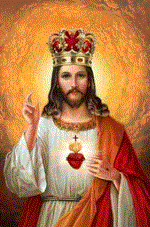
Today we celebrate the Feast of Christ the King. But what kind of king is Jesus? He is not a king who seeks wealth, privilege, power, or personal comfort. He is a shepherd who cares for his people, especially those who are forgotten, neglected, and pushed to the margins of society. His kingdom is not measured by military strength, political influence, or material possessions. It is measured by love, compassion, justice, and service.
A month ago, we heard Jesus summarize the whole law and the prophets in two commandments: love God with all your heart, soul, and mind, and love your neighbor as yourself. If we want to love and serve the God we cannot see, Jesus tells us, we must love and serve the neighbor we can see. Today's Gospel takes that teaching one step further. Jesus identifies himself with the hungry, the thirsty, the stranger, the naked, the sick, and the imprisoned. Whatever we do for them, we do for him.
Notice that Jesus does not ask those gathered before him how much religious knowledge they possess, how many prayers they have said, or how faithfully they have attended religious services. Instead, he asks how they treated people in need. Did they feed the hungry? Give drink to the thirsty? Welcome the stranger? Clothe the naked? Visit the sick and those in prison?
Christianity is more than a collection of beliefs, religious practices, and familiar prayers. Our faith must become visible through concrete acts of compassion. It is not enough to help someone today and then forget about that person's needs tomorrow. The hungry will be hungry again; the homeless will still need shelter; the sick will continue to need care; and those in prison will still need encouragement and human contact.
Faithful disciples do not give up after their first efforts. They keep finding ways to help. In our parishes, people organize food pantries, clothing drives, prison visitation programs, and other ministries. Doctors, nurses, teachers, lawyers, counselors, and other professionals often give their time and expertise to people who cannot afford their services. These are important expressions of Christian discipleship.
But the needs of the poor and vulnerable are often greater than individual volunteers or parish ministries can address. We must also be concerned about the larger structures of society that affect people's lives. This includes community, state, and national programs that aid those who struggle to obtain food, housing, health care, and other necessities.
In recent years, the federal government has reduced its commitment to several programs that provide essential assistance to poor and vulnerable Americans. Changes in government support have created additional difficulties for some families and individuals who depend on these programs to meet their basic needs. Government policies can certainly be debated, but our Christian responsibility to care for the poor should never be forgotten. We cannot ignore the suffering of people simply because addressing their needs is complicated or politically difficult.
Our concern must also extend beyond our local communities. We cannot be nearsighted or pretend that the desperate needs of people throughout the world do not concern us. Consider the plight of immigrants who leave their homes because of poverty, violence, or the hope of providing a better future for their families. The Catholic Church has consistently called for an immigration system that respects human dignity, protects families, and provides safe and lawful ways for people to migrate. While nations have legitimate responsibilities to protect their borders, they must also recognize the human beings who stand behind the immigration debate.
These are not simply political or economic questions. They are also moral and Christian questions. When we speak about the hungry, the thirsty, the stranger, the naked, the sick, and the imprisoned, we are speaking about real people whose lives and dignity matter to God.
The Feast of Christ the King challenges us to examine what kind of kingdom we are helping to build. If Christ is truly our King, then his values must become our values. We cannot honor him in our churches on Sunday while overlooking him in the suffering people we encounter during the week.
At the final judgment, Jesus does not identify himself with the powerful, the wealthy, or the influential. He identifies himself with the least among us. That is the remarkable message of today's Gospel: Christ is present in those who need our compassion and assistance.
As we bring this liturgical year to a close, let us remember that our allegiance to Christ the King is demonstrated not simply by what we profess but by how we live. The measure of our Christian faith is found in the love we extend to others, especially those who have the least.
To serve them is to serve Christ. And to welcome them is to welcome the King himself.
Click here for a link to this Sunday’s readings:
https://bible.usccb.org/bible/readings/112226.cfm
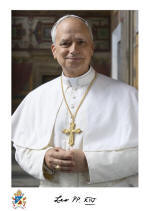
“No Christian can regard the poor simply as a societal problem; they are part of our ‘family.’ They are ‘one of us.’”
— Pope Leo XIV, Dilexi Te, No. 104.

Beloved: See what love the Father has bestowed on us that we may be called the children of God.
--1 John 3:1
All Saints’ Day is an opportunity to reflect on what it means to live as children of God. And what better way than to look at the lives of saints through the lens of some themes of Catholic social teaching. The following quotes come from the book, Saints and Social Justice: A Guide to Changing the World by Brandon Vogt (Our Sunday Visitor, 2013).
LIFE AND DIGNITY OF THE HUMAN PERSON--St. Peter Claver--Born in Spain in 1580, he would spend his life in Columbia serving African slaves. Yearly, ten thousand Africans arrived despite Popes Paul III and Urban VIII condemning slavery. Peter “sensed that while he couldn’t suppress this great injustice, he could at least alleviate the suffering by promoting the dignity of the slaves” (30).
OPTION FOR THE POOR AND VULNERABLE--Blessed Pier Giorgio Frassati--“Applying his gifts as a layperson, Pier Giorgio knew that followers of Jesus “should always prefer the needs, concerns, and desires of the poor and vulnerable above their own” (79).
DIGNITY OF WORK AND RIGHTS OF WORKERS--Servant of God Dorothy Day--She and Peter Maurin launched The Catholic Worker in 1933.”The paper aimed to put Catholic social teaching in ordinary terms and to promote the transformation of society--especially the sphere of work. . . It called readers to make a personal response” (111).
SOLIDARITY--St. John Paul II--The term “solidarity” was birthed when the Pope visited Poland in 1979 and flowered with a national labor union of the same name. “The group [80% of Poland’s workforce] never resorted to violence, but through strikes and protests, they opposed the Soviet Regime. A deep spirituality fueled the Solidarity movement. . .and [the Pope] regularly sent financial aid and spiritual materials. . .writing strong letters. . .” (120-121).
CARE FOR CREATION--St. Giles--Orphaned at an early age, he gave away his inherited wealth and aimed to become a hermit in the woods. This man of the mid-seventh century “shunned the unnecessary domination of animals. . .saw the land as a gift from God meant to be shared and cultivated rather than property to be owned, exploited . . .” (137).
Child of God, how are you living and loving?
Barbara Molinari Quinby, MPS, Director
Office of Human Life, Dignity, and Justice Ministries
Holy Name of Jesus Cathedral, Raleigh, NC
Mini reflections on the Sunday scripture readings designed for persons on the run. “Faith Book” is also brief enough to be posted in the Sunday parish bulletins people take home.
From today’s Gospel reading:
I was hungry and you gave me food, I was thirsty and you gave me drink,
a stranger and you welcomed me, naked and you clothed me,
in prison and you visited me.
Reflection:
When judgment is passed, it will be based, Jesus tells us, on whether we showed our love for those in need. This love isn’t expressed just in words, but also in concrete actions. We Christians aren’t only a group who share a common belief system, liturgical practices and religious vocabulary. We are also called to express our beliefs through concrete acts that address the needs of those within our physical sight and the needs of those brought close to us through modern media – television, newspapers, the internet, etc.
So, we ask ourselves:
-
Do I sometimes find it hard to see Jesus in the distressful disguise of the poor?
-
Do I wait for someone to ask me for help or am I sensitive to their needs even before they ask?
POSTCARDS TO DEATH-ROW INMATES
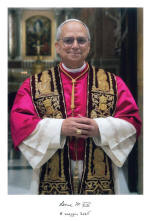
“Someone who says, ‘I’m against abortion’ but says, ‘I’m in favor of the death penalty,’ is not really pro-life.”
---Pope Leo XIV
Inmates on death row are the most forgotten people in the prison system. Each week I am posting in this space several inmates’ names and locations. I invite you to write a postcard to one or more of them to let them know: we have not forgotten them; are praying for them and their families; or whatever personal encouragement you might like to give them. If the inmate responds, you might consider becoming pen pals.
Please write to:
James Mc Kamey #1506090 (On death row since 1/26/2023)
Wisezah Buckman #1120630 (11/1/2023)
Jonathan Monk #1427917 (3/26/2025)
Joel Valdez #1267627 (8/20/2025)
Central Prison PO Box 247, Phoenix MD 21131
(While the prison is in Raleigh mail for inmates is processed at this address)
For more information on the Catholic position on the death penalty go to the Catholic Mobilizing Network: http://catholicsmobilizing.org
“First Impressions” is a service to preachers and those wishing to prepare for Sunday worship. It is sponsored by the Dominican Friars. If you would like “First Impressions” sent weekly to a friend, CLICK HERE.
If you would like to support this ministry, please send tax deductible contributions to:
Fr. Jude Siciliano, OP
Holy Rosary Priory
3600 Travis St.
Houston, TX 77002-9591
Make checks payable to: Dominican Friars.
Or click here to make a secure online donation:

